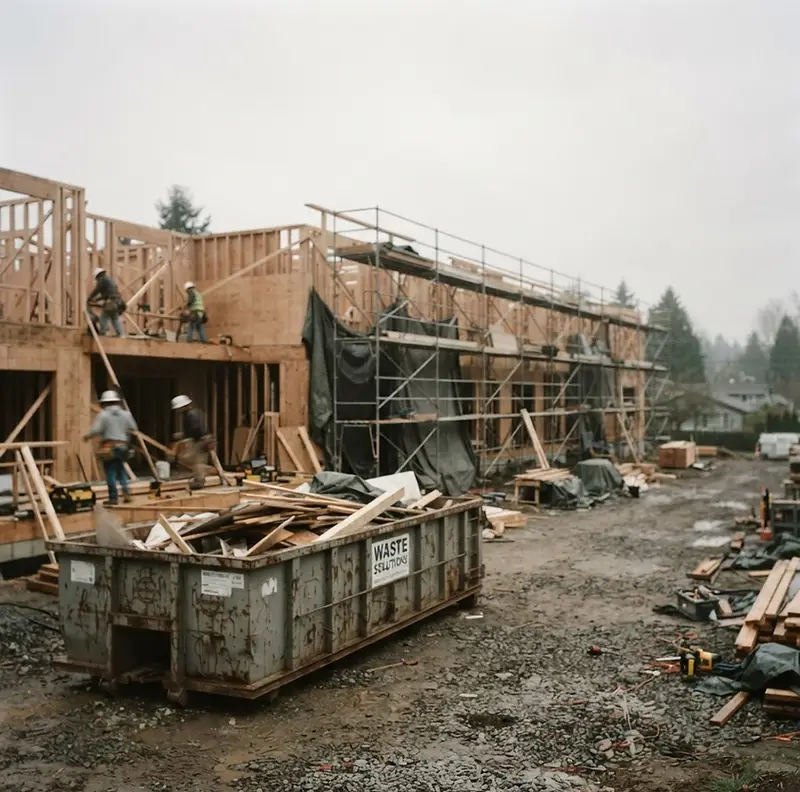

Debris is one of the biggest material flows on any job site
It is easy to think of debris as the leftover, the afterthought once the real work is done. The national numbers say otherwise. The EPA estimates the United States generated roughly 600 million tons of construction and demolition debris in 2018 - more than twice the volume of all municipal solid waste combined. Of that, about 145 million tons ended up in landfills.
Read those numbers as a builder and the implication is plain: on any given project, the material leaving the site is a logistics stream as real as the material arriving. It occupies laydown space, it blocks trades, it fills containers on its own schedule, and when it is managed badly it shows up exactly where a superintendent least wants it - in the critical path.

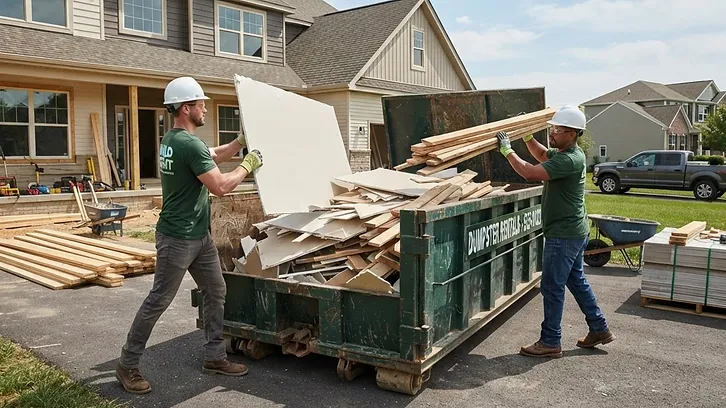
Every hour your crew spends hauling is an hour they are not building
The default on many jobs, especially residential and light commercial, is to make debris the crew's problem. Laborers consolidate it, someone's pickup runs it to the transfer station, and the cost disappears into labor hours no one itemizes. But the math is unkind: you are paying skilled-trade rates for dump runs, burning fuel and vehicle wear, and losing site hours to transfer station queues. On a tight schedule, those leaked hours become the overtime you pay at the end.
There is also the compliance side. C&D debris has disposal rules - what can go where, what must be separated, what a facility will and will not accept - and a subcontractor's cousin with a trailer is not reading them. An improperly dumped load traced back to your project is a problem no GC wants to explain to an owner.
Get debris handling scoped for your next job before it becomes the schedule risk.
Get your instant price
Enter your ZIP to see live pricing
No obligation. See your price first.
Rated 4.9/5 across 1k+ Atlanta jobs
Containers when you need them, crews when you don't
WasteMatch covers both modes of site debris work. When the job calls for a container, we deliver dumpsters and dump trailers on your schedule, placed where your site logistics need them, and swapped or pulled when they are full rather than when a national dispatcher gets around to it. Rental terms and pricing are guaranteed up front, so the container line item in your budget stays the number you wrote down.
When the debris is already piled - a demo day's output, a punch-out cleanup, a trade's leave-behind - a crew comes to you. Background-checked pros load, haul, and dispose of it compliantly, and the job is tracked from dispatch to completion. Your crew never breaks stride.
For builders running multiple projects, Partner Solutions puts the whole thing under one relationship: consistent pricing across sites, one invoice structure, and a dispatch channel your supers can use without getting quotes every time.
Clean sites are safer sites - and they finish on time
Every superintendent knows the correlation: the tidy site has fewer trips, fewer punctures, fewer OSHA conversations, and better trades morale than the one where everyone steps over yesterday's demo. Debris removal is not just about the material leaving - it is about what the site looks like while the work is happening. A reliable removal cadence keeps the site walkable, the laydown areas usable, and the inspection days calm.
That is the real product here: not hauling, but a job site where debris is never the thing the schedule is waiting on.